Knowing how to clean guttering properly involves more than removing leaves from inside the gutter channel. The visible outside surface also collects dirt, algae, traffic film, bird mess, cobwebs and black marks. Over time, these stains can make white UPVC guttering look old and poorly maintained.
Cleaning the inside and washing the outside serve two different purposes. Internal gutter clearing restores water flow and helps prevent overflowing. Exterior gutter washing improves the appearance of the roofline. It can also make it easier to notice leaking joints, loose brackets and damaged sections.
Many homeowners assume that a gutter cleaning quotation includes both services. This is not always the case. Some companies only remove debris from inside the channel, while others provide a complete gutter and UPVC wash. Always confirm what is included before accepting a quotation.
Does Cleaning Guttering Mean Clearing or Washing?
The words gutter cleaning can describe two separate services.
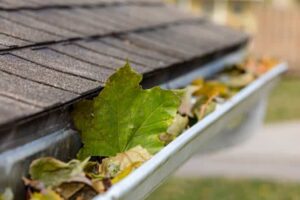
Gutter clearing means removing leaves, moss, twigs, roof debris and other material from inside the gutter channel. This allows rainwater to move freely towards the downpipe.
Gutter washing means cleaning the visible outside face of the guttering. It may also include washing the fascia boards, soffits, brackets and outside surfaces of downpipes.
Internal clearing protects the function of the drainage system. Exterior washing improves its appearance. A complete service can include both, but customers should never assume this without asking.
Before booking a service, ask the contractor these questions:
- Will all debris be removed from inside the gutter channel?
- Will the downpipe outlets be checked?
- Will the visible outside face of the guttering be washed?
- Are the fascias and soffits included?
- Will the gutter joints and brackets be inspected?
- Will photographs be provided after the work?
Clear answers help you understand exactly what you are paying for.
How to Identify Your Gutter Material
Before learning how to clean guttering, you need to identify the material. A cleaning product that works well on one surface may damage another.
UPVC guttering
UPVC is common on homes across Liverpool and Merseyside. It is lightweight, smooth and normally available in white, black, brown or grey. White UPVC shows dirt quickly, while black guttering can hide surface stains.
UPVC is generally easy to wash, but harsh chemicals and rough tools can scratch or discolour it.
Aluminium guttering
Aluminium guttering is light and resistant to rust. It may have a painted or powder coated finish. Strong cleaners can affect this coating, so use a mild product and test it on a small hidden area.
Cast iron guttering
Cast iron is strong and heavy. It is often found on older or traditional properties. Look for signs of rust, peeling paint and weak joints before cleaning. Aggressive washing may remove loose paint and expose more metal.
Steel guttering
Steel guttering normally has a protective coating. Check for scratches, corrosion and damaged paint. Avoid abrasive pads that could remove the protective layer.
If you are unsure about the material, start with warm water and a small amount of mild washing up liquid. Test a hidden section before cleaning the full roofline.
Safe Cleaning Products for UPVC Guttering
The safest approach is to begin with the mildest product that can remove the dirt.
Warm water mixed with a small amount of washing up liquid is suitable for general dust, cobweb marks and light traffic film. Use a soft cloth, sponge or soft brush to loosen the dirt.
For stubborn grime, choose a cleaner marked as suitable for UPVC. Read the product instructions carefully and never leave the cleaner on the surface longer than recommended.
A good cleaning solution should remove dirt without affecting the colour, rubber seals, painted walls or nearby plants.
Suitable options may include:
- Warm water with mild washing up liquid
- A dedicated UPVC cleaning solution
- A mild exterior surface cleaner approved for plastic
- A diluted solution designed to treat algae on UPVC
Always test the product on a hidden section. Allow the test area to dry fully before checking for fading, cloudiness or surface damage.
Do not mix different cleaning chemicals. Mixing products can create harmful fumes or cause an unexpected reaction.
Tools Needed for Exterior Gutter Washing
The correct tools make the work safer and reduce the risk of scratching the guttering.
You may need:
- Protective gloves
- Safety glasses
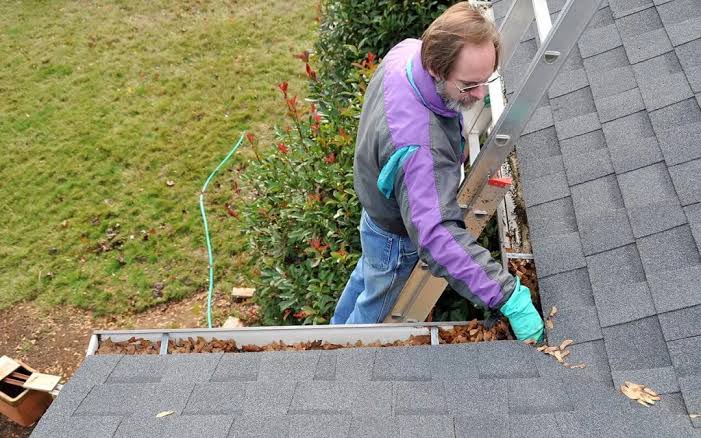
- A stable ladder suitable for the working height
- A ladder stabiliser or stand off
- A bucket with a secure hook
- A soft sponge
- Microfibre cloths
- A soft bristle brush
- A telescopic water fed brush
- A garden hose with a gentle spray setting
- A plastic gutter scoop
- A bucket or strong bag for debris
- A plumber’s snake for accessible downpipe blockages
- Suitable footwear with clean, firm soles
Ground based telescopic equipment is usually safer than working from a ladder. If the property is high, access is restricted or the ground is uneven, contact a trained gutter cleaning company.
Never rest a ladder directly against plastic guttering. The pressure can crack the gutter, bend the edge or loosen the brackets.
Check the Area Before You Start
A few minutes of preparation can prevent damage and accidents.
Look for overhead electrical cables, conservatory roofs, fragile extensions, uneven paving and narrow access points. Check whether the ground is strong enough to support your equipment.
Move garden furniture, vehicles and delicate pots away from the work area. Close windows and doors before washing. Cover sensitive plants if you plan to use a cleaning product.
Inspect the guttering from ground level. Look for sagging sections, open joints, cracks, missing brackets or water stains. If the gutter already appears damaged, washing it without care could make the problem worse.
Do not attempt high level work during strong wind, heavy rain, frost or poor visibility.
How to Remove Loose Dirt and Cobwebs
Loose material should be removed before water or cleaning solution is applied.
Use a soft brush to sweep away cobwebs, dry leaves, dust and insect nests from the outside surface. Begin at one end and work towards the other.
Pay attention to the underside of the gutter, the areas around brackets and the connection between the gutter and fascia. These spaces often hold dirt that cannot be seen from the ground.
Do not use a metal scraper. It may leave permanent scratches on UPVC and damage painted finishes.
Removing loose dirt first prevents it from turning into muddy streaks when the surface becomes wet. It also allows the cleaning solution to reach the stains directly.
How to Wash the Outside of Guttering
If you want to understand how to clean guttering effectively, work in small sections. Trying to wet the entire roofline at once can allow dirty water or cleaning solution to dry before it is rinsed.
Follow these steps:
- Rinse a small section using clean water and a gentle spray.
- Apply warm soapy water with a soft sponge or brush.
- Allow the solution to sit briefly, but do not let it dry.
- Move the brush along the direction of the gutter.
- Use light pressure around joints and end caps.
- Rinse the section thoroughly with clean water.
- Check for remaining stains after the surface has dried.
Start at the highest practical point and work downwards. This stops dirty water from running over an area you have already cleaned.
Rinse nearby windows, walls and paving if dirty water reaches them. Do not leave cleaning solution on painted walls or glass.
A telescopic water fed brush can be useful for accessible two storey rooflines. It allows the outside surface to be washed from the ground, although it may not provide enough control for very stubborn marks.
How to Clean Corners, Brackets and Joints
Corners, brackets and joints collect more dirt than the flat front surface. They also need gentler handling because excessive pressure can loosen seals and clips.
Use a small soft brush to clean around each bracket. An old soft toothbrush can help reach narrow spaces, provided it does not have hard or damaged bristles.
Do not force a cloth into a joint. The rubber seal inside the fitting helps create a watertight connection. Disturbing it can cause a leak.
When washing corners, support the tool and use short controlled movements. Avoid pulling down on the gutter edge.
After cleaning, look for gaps between sections. Check whether any connector appears twisted or displaced. A clean gutter joint that continues to drip during rainfall may need a new seal or fitting.
Removing Algae and Green Gutter Stains
Green marks are usually caused by algae, organic growth or water sitting on a dirty surface. They are common on shaded sides of a property and near trees.
Begin with warm soapy water and a soft brush. Light green staining may come away after gentle agitation.
For heavier growth, use a product approved for plastic exterior surfaces. Apply it according to the manufacturer’s instructions. Give it enough time to work, but do not allow it to dry on the gutter.
Rinse the surface completely. Residue left behind can create streaks and attract more dirt.
If the green mark returns quickly, look for the underlying cause. Water may be escaping from a leaking joint, running behind the gutter or overflowing because of a blockage. Cleaning the stain alone will not solve a drainage problem.
Trimming branches that touch the roofline may reduce the amount of moisture and organic debris around the guttering. Any tree work should be completed safely and with consideration for protected trees or local requirements.
Dealing With Black Marks on White Guttering
Black marks on white gutters may come from road pollution, roof material, dirty rainwater, rubber contact, biological growth or old surface damage.
Start with mild washing up liquid and warm water. Use a microfibre cloth to see whether the mark is sitting on the surface.
If it remains, apply a UPVC safe cleaner to the cloth rather than pouring it directly onto the gutter. Work on a small area and use gentle circular movements. Rinse immediately after cleaning.
Do not use wire wool, scouring powder or a hard kitchen pad. These may remove the mark, but they can also leave fine scratches. Scratched UPVC collects dirt faster and becomes harder to clean in the future.
Some old black marks may have penetrated or changed the surface. Complete removal may not be possible without affecting the finish. In this situation, improving the appearance safely is better than using an aggressive chemical that causes permanent damage.
How to Clean Fascias and Soffits
Fascias are the boards fitted behind the guttering. Soffits cover the underside of the roof edge. Together, they form an important part of the visible roofline.
Fascia cleaning and soffit cleaning are often booked with exterior gutter washing, but they may be priced separately.
To clean UPVC fascias, remove cobwebs and loose dirt first. Apply warm soapy water with a soft brush, working in manageable sections. Rinse each section before the solution dries.
Soffits may contain ventilation openings. Do not force water into these vents. Water entering the roof space can affect insulation, timber and electrical components.
Older fascia boards may be made from painted timber. Check for peeling paint, soft areas and signs of rot before washing. Avoid soaking damaged timber.
Cleaning fascias and soffits can make the full roofline look brighter. It also exposes cracks, open joints and damage that may have been hidden by dirt.
How to Clear the Inside Gutter Channel
Exterior washing improves appearance, but clearing the inside restores water flow. A complete explanation of how to clean guttering must include both tasks.
Wear thick gloves because gutter debris may contain sharp objects, insects and contaminated material.
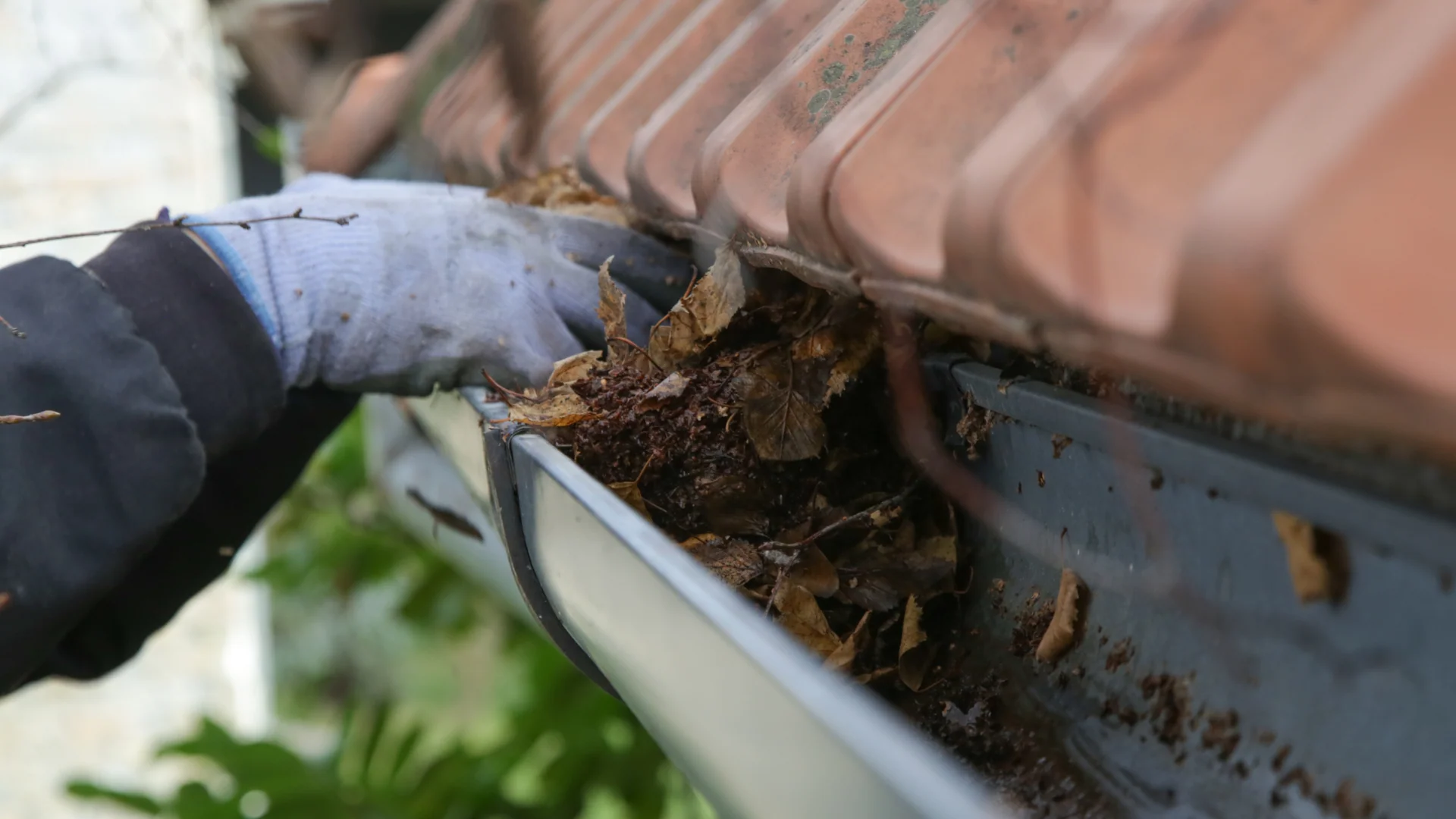
Remove leaves, moss, twigs and sludge with a plastic gutter scoop. Place the debris in a bucket or bag rather than dropping it onto the ground.
Work towards the downpipe outlet, but do not push a large amount of waste into the pipe. This can create a blockage that is difficult to reach.
Once most debris has been removed, rinse the channel with a controlled flow of water. Watch how the water moves. It should travel towards the outlet without sitting in deep pools.
A small amount of standing water may be caused by the design of the system, but a large pool can indicate poor alignment, sagging guttering or incorrectly positioned brackets.
Check behind the gutter for moss that has fallen from the roof. Debris can become trapped between the gutter and fascia and hold moisture against the building.
Checking and Cleaning Downpipes
A clear gutter channel will still overflow if the downpipe is blocked.
Pour a small, controlled amount of water near the outlet and watch the bottom of the downpipe. Water should exit without backing up.
If it drains slowly, check the outlet for leaves and moss. Remove accessible debris by hand while wearing gloves.
A flexible drain rod or plumber’s snake may help with a simple blockage. Use it carefully to avoid separating pipe joints.
Do not force a solid pole into a plastic downpipe. It can crack the pipe or push the blockage deeper.
Some downpipes connect to underground drainage. If water backs up from the bottom, the problem may be below ground rather than inside the visible pipe. This requires a different type of inspection.
Products and Tools That May Cause Damage
Learning how to clean guttering also means knowing what to avoid.
Strong bleach
Bleach may affect colour, seals, painted surfaces, plants and nearby materials. It can also create harmful fumes if mixed with another cleaner. A specialist UPVC product is normally a safer option.
Solvent cleaners
Strong solvents can soften plastic, remove shine and cause discolouration. Do not use a solvent unless the gutter manufacturer confirms that it is suitable.
Abrasive pads
Rough pads, wire brushes and scouring powders can scratch the surface. The scratches may become more visible when sunlight hits the guttering.
Metal scrapers
A metal scraper can cut UPVC and damage protective coatings on metal guttering. Use a plastic scoop inside the gutter channel.
High pressure washing
A powerful pressure washer can force water behind fascia boards, loosen gutter joints and damage seals. It may also spread dirty water across walls, windows and neighbouring properties.
Boiling water
Very hot water may affect plastic components and rubber seals. Warm water is sufficient for normal cleaning.
Unsupported ladders
A ladder placed against the gutter can bend or crack it. Use suitable access equipment and a proper ladder stand off.
Can Pressure Washing Loosen Gutter Joints?
Yes. High pressure water can disturb clips, seals and connectors, especially when the system is old or already loose.
Pressure can also push water behind the gutter and fascia. Once water enters a hidden space, it may reach timber, insulation or internal walls.
If professional equipment is used, the pressure, distance and angle must be carefully controlled. For most household UPVC gutter washing, a soft brush and low pressure rinse provide a safer result.
High pressure is not always better. The aim is to remove dirt without creating a repair problem.
How Often Should Exterior Guttering Be Washed?
There is no single schedule for every property. Location, tree cover, traffic, building height and roof condition all make a difference.
For many homes, exterior gutter washing once a year can keep the roofline looking clean. Properties close to busy roads, trees or the coast may need more frequent attention.
Internal gutter clearing is commonly considered during autumn after leaves have fallen and again after periods of severe weather. A property surrounded by trees may need additional checks.
In Merseyside, regular rain and damp shaded areas can encourage algae and organic growth. Homes in Liverpool, Wirral, Sefton, St Helens, Knowsley and Halton can have different levels of exposure depending on nearby trees, roads and coastal air.
The best schedule is based on the condition of your own property. Check the guttering after storms and during heavy rain. Early action is usually easier and less expensive than waiting for an overflow.
When Gutter Stains May Indicate a Leak
Not every stain is just dirt.
A dark vertical line below a joint can indicate that water is escaping between two gutter sections. Green growth in one small area may show that the surface remains wet because of a slow leak.
Water marks on the fascia can suggest overflow, poor alignment or water passing behind the gutter. Damp patches on an outside wall may point to a blocked outlet or damaged downpipe.
Other warning signs include:
- Dripping from a joint after the rain has stopped
- Water running behind the gutter
- Peeling paint on nearby timber
- A sagging gutter section
- Damp marks close to the roofline
- Soil erosion below a downpipe
- Green staining that returns soon after washing
Cleaning may expose the fault, but it will not repair it. A damaged seal, bracket or section should be assessed before it causes further water damage.
How to Clean Guttering Safely From the Ground
The safest way to approach how to clean guttering is to reduce work at height wherever possible.
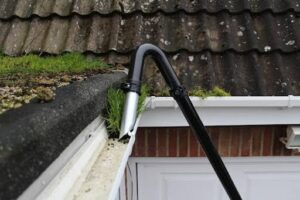
A telescopic brush can wash accessible exterior surfaces from the ground. A gutter vacuum system can remove dry and loose debris from inside the channel. Camera equipment can then be used to check the result.
Ground based systems have limits. Heavy rooted growth, compacted sludge, damaged gutter guards and blocked downpipe outlets may still need closer access.
Do not improvise with unstable platforms, household chairs or ladders placed on boxes. If safe access is not possible, stop and contact a professional.
Professional contractors should use equipment suitable for the property and the condition of the ground. Ask whether they are insured and how they plan to access difficult sections.
Common Gutter Cleaning Mistakes
Several simple mistakes can lead to poor results or damaged guttering.
The first is cleaning only the section above the front door or driveway. Blockages often develop in corners and above extensions where they cannot be seen easily.
The second is pushing all debris into the downpipe. This moves the problem rather than removing it.
The third is using excessive force on stubborn stains. A strong chemical or rough pad may permanently damage the surface.
The fourth is forgetting to rinse. Cleaning product residue can dry into visible streaks.
The fifth is assuming an overflow is always caused by leaves. Poor alignment, a loose bracket, a blocked underground drain or an undersized outlet may also be responsible.
The final mistake is expecting every mark to disappear. Old UPVC may have permanent discolouration. Safe improvement is more sensible than damaging the surface in pursuit of a perfect white finish.
Should You Clean Guttering Yourself?
A low and easily accessible gutter on firm, level ground may be manageable for a confident homeowner with suitable equipment.
Professional help is recommended when:
- The property has two or more storeys
- The ground is sloped or uneven
- A conservatory or extension blocks access
- The guttering is above a fragile roof
- The system is leaking or sagging
- Downpipes appear blocked
- You cannot work safely from the ground
- The stains require specialist treatment
- You need photographic evidence of the result
Understanding how to clean guttering does not remove the risks of working at height. Safety should always take priority over saving time or money.
Professional Gutter and UPVC Cleaning in Merseyside
If your guttering is heavily stained, difficult to reach or no longer draining correctly, Merseyside Gutters can provide a professional solution.
Merseyside Gutters serves residential and commercial properties across Liverpool, Wirral, Sefton, St Helens, Knowsley, Halton and surrounding parts of Merseyside. Services include gutter cleaning, gutter repairs, downpipe work, fascia and soffit cleaning, and roofline installations.
Before requesting a quotation, explain whether you need internal clearing, exterior washing or both. Mention any overflowing sections, visible leaks, green staining or black marks. This helps the team understand the condition of the system and recommend the right service.
A professional inspection can also identify loose joints, damaged brackets and drainage problems that may not be visible from the ground.
Restore your roofline and protect your property. Contact Merseyside Gutters today to request a free quotation.
Frequently Asked Questions
Can washing up liquid clean UPVC gutters?
Yes. A small amount of mild washing up liquid mixed with warm water can remove general dirt, light traffic film and fresh marks from UPVC guttering. Apply it with a soft sponge or brush, then rinse thoroughly. Test a small hidden section first.
Can bleach damage plastic guttering?
Strong or poorly diluted bleach can affect the colour of plastic, rubber seals, painted surfaces and nearby plants. It may also create dangerous fumes if mixed with another cleaner. Use a cleaner specifically approved for UPVC whenever possible.
Can pressure washing loosen gutter joints?
Yes. High pressure water can disturb gutter clips, rubber seals and connecting joints. It may also force water behind the fascia boards. A soft brush and gentle rinse are safer for most domestic guttering.
How do you remove black marks from white gutters?
Start with warm water, washing up liquid and a microfibre cloth. For stubborn marks, use a UPVC safe cleaner and test it on a hidden area. Avoid wire wool, rough pads, solvents and abrasive powders because they can scratch or discolour the plastic.
Does gutter cleaning include fascia washing?
Not always. Some gutter cleaning services only remove debris from inside the channel. Exterior gutter washing, fascia cleaning and soffit cleaning may be separate services. Ask the contractor to confirm every task included in the quotation.
What is the best way to learn how to clean guttering?
Start by identifying the gutter material and checking for damage. Remove internal debris, test the water flow and wash exterior surfaces with a mild product. Use ground based equipment where possible and hire a professional when safe access is not available.
Why does green staining return after gutter washing?
Returning green stains may indicate constant moisture. The gutter could be leaking, overflowing or holding water because of poor alignment. Check the joints, brackets, outlet and downpipe rather than repeatedly washing the same stain.
How do I know whether my downpipe is blocked?
Pour a controlled amount of water near the gutter outlet. If the water drains slowly, backs up or causes the gutter to overflow, the outlet or downpipe may be blocked. A blockage below ground may require a separate drainage inspection.
Knowing how to clean guttering correctly helps protect both the appearance and performance of your roofline.
Begin by identifying the gutter material. Use mild products, soft tools and controlled water pressure. Remove loose dirt before washing and work carefully around brackets, corners and joints.
Remember the important distinction: exterior gutter washing improves appearance, while internal gutter clearing restores water flow. Fascia and soffit cleaning may be a separate service, so always confirm what a quotation includes.
Look beyond surface stains. Repeated green marks, dark lines below joints and damp fascia boards may indicate a leak or overflow. Cleaning can reveal these issues, but repairs may still be needed.
If access is difficult or the guttering appears damaged, contact Merseyside Gutters. Professional cleaning can give your roofline a cleaner appearance while helping you spot problems before they become more serious.