How to repair leaking gutters starts with checking the whole gutter system when water escapes from several places. A blocked outlet, loose brackets and damaged joint seals can produce similar symptoms but need different repairs. Identify where water should flow, clear restrictions, correct poor support and repair damaged fittings before testing everything together.
A drip above the front door may be easy to notice. Another leak behind an extension or beside a downpipe can remain hidden until staining appears. Fixing only the most visible problem may leave the main cause untouched.
For homeowners in Merseyside, the aim should be a gutter system that carries rainwater safely from the roof to its drainage point. That means looking beyond individual joints and deciding which repairs will make the greatest difference.
What Multiple Gutter Leaks Can Tell You
Multiple gutter leaks do not automatically mean that every gutter needs replacing. They can show that one drainage problem is affecting several areas, or that separate parts have developed faults over time.
For example, a blocked outlet may cause water to collect along a gutter run. As the level rises, water can spill over the edge and escape through weak joints. Several wet patches may therefore have one main cause.
In another property, the front gutter may have a worn seal while the rear section has a crack. Those faults need separate attention.
Common possibilities include:
- Leaves and moss restricting water flow.
- Loose brackets allowing sections to sag.
- Damaged seals inside connecting fittings.
- Cracked outlets, corners or stop ends.
- Sections that have moved out of position.
- A gutter arrangement that cannot handle the water reaching it.
Understanding how to repair leaking gutters means finding the cause behind each symptom. Counting drips alone does not tell you how much work is needed.
Mapping the Leaks Around Your Property
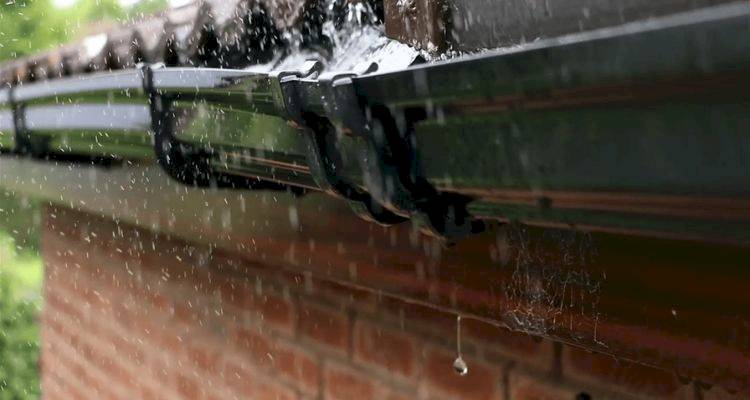
Start with observations from ground level. During rainfall, watch where water first escapes and whether it drips through a joint, spills over the front or runs behind the gutter.
Avoid standing beneath loose guttering. Do not climb a ladder in rain or lean from an upstairs window to inspect a fitting.
Make a simple record of the property’s front, rear and sides. Include extensions, porches, garages and bay windows where they have separate gutters.
For each problem, note:
- Its position.
- Whether it happens in light or heavy rain.
- Whether water reaches a wall, doorway or path.
- Whether a downpipe nearby appears to discharge.
- Any visible sagging, gaps or staining.
Photographs taken from a safe position can help explain the problem when booking a visit.
Record the time as well. A leak that continues after rainfall stops may point towards retained water. Overflow that begins only during intense rainfall may need a different investigation.
This early record helps an inspection cover the whole property.
Checking Each Gutter Run
A gutter run is a continuous length that carries water towards an outlet. Check each run as a separate part of the system, then consider how it connects to the rest.
A front roof, rear extension and garage may have different gutter sizes, materials and drainage arrangements. A fault in one does not prove that the others need the same repair.
The inspection should consider the condition of the channel, connecting joints, corners and stop ends. It should also check whether water leaving the roof actually enters the gutter.
Water running behind guttering may involve its position or a problem at the roof edge. Adding sealant to a nearby joint would not resolve that cause.
When assessing how to repair leaking gutters, look for patterns along each run. Several low points suggest a support or alignment issue. One damaged fitting in an otherwise sound section suggests a more local repair.
For a general explanation of gutter types and their purpose, see Wikipedia’s guide to rain gutters.
Inspecting Outlets and Downpipes
The outlet connects the gutter to the downpipe. If that opening is restricted, water may collect along the gutter even when much of the channel looks clear.
Leaves, roof moss and other debris can gather around this point. A blockage may also sit farther down, particularly around a bend or connection.
Gutter drainage problems should therefore be checked from the roof edge to the discharge point.
An inspection should establish whether:
- Water reaches the outlet freely.
- The outlet opening is clear.
- Downpipe bends and connections are secure.
- The pipe has visible cracks or gaps.
- Water can leave the bottom without backing up.
Do not push debris into a downpipe and assume it has disappeared. This can move the obstruction somewhere harder to reach.
Where debris is causing the problem, gutter clearing and cleaning may be needed before the remaining leaks can be assessed properly.
If water backs up from a ground level drain, further drainage investigation may be necessary. Replacing the gutter above will not clear an obstruction below it.
Looking for Standing Water
A gutter can look tidy from outside while holding water inside. Persistent pools deserve attention, especially after debris has been removed.
Standing water may collect where a section sags, where the outlet is obstructed or where the run directs water away from its intended discharge point.
A small amount of surface moisture is different from a deep pool that remains after rain. The inspection should establish where water collects and why.
Learning how to repair leaking gutters involves correcting that cause before replacing every wet joint. A new seal may stop one drip while the drainage problem remains.
The appropriate remedy might involve adjusting brackets, repositioning a section or replacing a distorted length. The correct arrangement depends on the gutter system and its manufacturer’s instructions.
Avoid applying a single slope measurement to every property. Different products and roof layouts need an assessment of their own.
Once adjustments are complete, water should be introduced in a controlled way to check whether the affected area drains as intended.
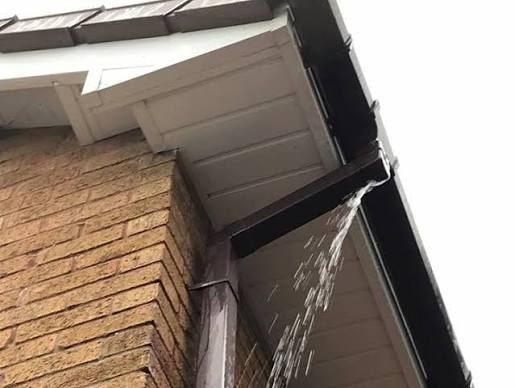
Checking Brackets and Fascia Condition
Brackets support the gutter and help it maintain its position. If they loosen, break or pull away, the gutter can drop and place strain on nearby joints.
The fascia is the board along the roof edge where many gutter brackets are fixed. Its condition matters because a bracket needs a sound fixing point.
An inspection should look for movement, damaged fixings, broken supports and visible deterioration around the attachment points.
Timber that is soft or badly decayed may need repair before brackets can be secured properly. Tightening a screw into an unsound surface is unlikely to provide a lasting solution.
For homeowners asking how to repair leaking gutters, this explains why a joint repair sometimes needs supporting work nearby.
The repair order matters. Address an unsafe or weak fixing point, restore the gutter’s support and position, then check the connections.
Bracket spacing and fixing details should follow the relevant product guidance. A heavy metal gutter and a lightweight plastic system should not be treated as identical.
Separate Faults Compared With a Wider Problem
Several leaks can look similar from below while having different causes. A useful assessment explains which faults are connected and which are independent.
A wider problem becomes more likely when a whole run overflows, several joints have moved or repeated repairs fail in the same area.
Separate faults are more likely when the damage is local and surrounding sections drain properly.
For example, a cracked stop end at the front may have no connection to a loose downpipe at the rear. Both need repair, but replacing all the guttering would require further justification.
With plastic systems, fitting depth and space for temperature movement also matter. Manufacturer guidance should be followed when positioning gutter ends and assembling sealed fittings.
Knowing how to repair leaking gutters means matching the repair to the fault.
A damaged seal may need a compatible replacement. A cracked fitting may need changing. A sagging section may need corrected support. An overloaded system may need its capacity reviewed.
Applying the same patch to every leak can leave these differences unresolved.
Deciding Which Repairs Need Attention First
Repair priorities should reflect safety, active damage and the cause of the problem.
A loose gutter above an entrance needs prompt assessment because people pass beneath it. Water repeatedly entering the building also needs early attention.
Once immediate risks are addressed, restore drainage and support before finishing smaller repairs.
A sensible sequence is:
- Assess loose sections and unsafe fixings.
- Identify where water is entering or repeatedly soaking the building.
- Clear restrictions affecting drainage.
- Correct failed support and poor alignment.
- Repair or replace damaged joints and fittings.
- Test all affected runs and discharge points.
The exact order may change with the property. For example, unsafe supports may need securing before cleaning can begin.
When planning how to repair leaking gutters, ask which work is essential now and which areas can be monitored.
A useful quotation should explain the cause, the proposed repair and any limitations. “Repair gutters” gives much less information than a description identifying the affected run, outlet and fittings.
Staining can help locate a problem, but it does not prove that guttering is the only cause of damp. Persistent moisture may need a wider building inspection.
Repairing Several Areas During One Visit
Repairing several areas during one visit can be practical when access is suitable, the faults are understood and compatible parts are available.
It allows cleaning, support adjustments and fitting replacement to be planned together. It also gives an opportunity to test the system after all connected work is complete.
However, the number of visible leaks does not reliably predict the time required.
A small joint repair above a clear path may be straightforward to reach. A similar fault above a conservatory may require different access equipment.
Before the visit, share photographs and mention anything that affects access. This could include a narrow passage, locked gate, extension roof or restricted parking.
For gutter system repairs, ask whether the proposed work includes clearing affected sections, checking outlets, supplying fittings and testing drainage.
Merseyside Gutters offers gutter repair services in Merseyside, including work on leaks, damaged sections, sagging gutters and blocked downpipes.
A whole property assessment can help establish which of those services your home actually needs.
When Partial Replacement Makes Sense
Partial replacement can be appropriate when one length or fitting is damaged but the surrounding system remains serviceable.
Examples include a cracked corner, a distorted section or an outlet that can no longer connect securely.
Before recommending it, the inspection should establish that suitable replacement parts are compatible with the existing guttering. Similar colour or appearance does not guarantee a proper fit.
A partial repair should also leave reliable connections at both ends. Joining new guttering to badly deteriorated sections may simply move the next failure along the run.
Understanding how to repair leaking gutters includes recognising when repeated small repairs no longer offer good value.
Wider replacement may deserve consideration where damage is widespread, parts are unavailable or the existing arrangement needs substantial changes.
Ask for the reasons behind each option. A comparison should consider material condition, support, compatibility, drainage capacity and the likely scope of future work.
For damaged systems that need new sections or a changed arrangement, explore gutter and downpipe installation.
Several leaks alone are not enough reason to replace everything.
Checking Drainage After All Repairs
A repair should be checked for both watertightness and drainage. A dry joint is useful, but water still needs a clear route through the rest of the system.
After the work, a controlled flow test can help reveal leaks, pooling and restricted discharge.
Checks should include:
- Repaired joints and replacement fittings.
- Previously sagging sections.
- Corners and stop ends.
- Outlet connections.
- Downpipe joints and bends.
- The visible discharge point.
Testing should respect any curing time required by products used during the repair.
A modest hose flow does not reproduce every heavy rainfall event. If overflow occurs only in intense rain, the roof area, gutter capacity and outlet arrangement may need closer assessment.
For anyone researching how to repair leaking gutters, this final stage helps distinguish a completed repair from an untested patch.
Ask what was tested and whether anything remains unresolved. Keep photographs of the completed work where available.
A ground level check during later rainfall can provide useful follow up information, particularly if the original fault happened only under specific conditions.
Planning Gutter Repairs for Merseyside Properties
Merseyside properties vary in roof shape, access and drainage layout. A terraced home with shared guttering needs a different plan from a detached house with several independent downpipes.
Bay windows, rear extensions and adjoining garages can also create separate runs that are easy to overlook.
When arranging gutter repairs in Merseyside, describe the whole property. Mention whether water escapes at the front, rear or both, and whether any guttering connects to a neighbouring home.
Where a system is shared, access and the scope of work may need agreement before alterations begin.
An Illustrative Merseyside Property Example
The following example explains inspection findings and repair priorities. It is an illustrative scenario, not a documented Merseyside Gutters customer job.
Consider a terraced house in Liverpool where the owner reports three problems: overflow above the front entrance, a drip from the rear gutter and water escaping beside the extension downpipe.
An inspection could identify three separate findings.
At the front, debris restricts the outlet. Water rises along the run and spills near the entrance. The first drainage task would be to clear the restriction and check the downpipe before deciding whether any joints also leak.
At the rear, a loose bracket allows a section to dip. Water collects near a connecting fitting. The repair priority would be to check the fixing surface, restore support and alignment, then inspect the joint seal.
At the extension, a cracked downpipe bend releases water against the wall. That fitting would need a suitable replacement, followed by a discharge check.
The completed work would then be tested together.
This example shows why how to repair leaking gutters is a question about the whole system. Three visible leaks can require cleaning, support work and fitting replacement rather than one repeated treatment.
Preparing for Your Inspection
Before contacting Merseyside Gutters, gather photographs and note when each leak appears. Explain any previous repairs and whether the same areas have failed again.
Ask for a clear description of urgent work, any proposed replacement and how drainage will be checked afterwards.
You can contact Merseyside Gutters to discuss the affected areas and request a quote.
Frequently Asked Questions
Why Are Several Gutter Joints Leaking at Once?
Several joints may leak because water is backing up, sections have moved or seals have deteriorated. Poor support can also affect more than one connection. The inspection should establish whether there is a shared cause before treating each joint as an isolated fault.
Does Every Leak Need the Same Repair?
No. A blocked outlet needs clearing, a loose bracket needs secure support and a cracked fitting may need replacement. A joint may need cleaning, correct positioning or a compatible seal. The repair should follow the cause rather than the appearance of the drip.
Can One Blocked Outlet Affect a Whole Gutter Run?
Yes. If the outlet serves that run, a blockage can prevent water from leaving normally. Water may rise along the gutter and overflow elsewhere. Clearing the outlet can resolve the overflow, but damaged joints may still need separate attention afterwards.
Should All Gutters Be Replaced if Several Areas Leak?
No. Several leaks do not automatically justify complete replacement. Sound sections may remain in use while damaged fittings or lengths are changed. Wider replacement makes more sense when deterioration is extensive, compatible parts are unavailable or the existing drainage arrangement needs substantial improvement.
Can I Repair Leaking Gutters With Sealant?
Sealant is not a universal solution. It cannot restore a broken bracket, remove a blockage or correct a sagging run. Some repairs use suitable sealing products, while many plastic joints rely on rubber seals. Follow the gutter manufacturer’s repair guidance and avoid covering an unidentified fault.
Why Does a Gutter Still Leak After Cleaning?
Cleaning removes debris, but it does not repair cracks, failed seals or poor support. A clear gutter may also overflow if its capacity or outlet arrangement is unsuitable. Continued leaking means the remaining fault needs investigation rather than another clean by default.
Can I Check My Gutters Without a Ladder?
You can record overflow, staining, visible gaps and downpipe discharge from ground level. Photographs can help explain those symptoms. Internal seals, hidden blockages and fixing condition may need closer inspection using suitable access equipment. Do not overreach from ladders or windows to investigate.
What Is the Best First Step When Several Gutters Leak?
Arrange a whole system inspection and provide a record of every affected area. Knowing how to repair leaking gutters starts with identifying drainage restrictions, support problems and damaged components. A clear repair plan can then address the causes in the right order.
How Can I Reduce the Chance of Further Leaks?
Check the system from ground level after heavy rain and arrange cleaning according to how quickly debris collects. Pay attention to recurring overflow, loose fittings and changes around extensions or roof work. Early investigation can prevent a small, local fault from affecting more of the gutter run.
Need help with leaks around your property? Request a gutter repair quote from Merseyside Gutters and explain where the water is escaping so the inspection can cover every affected area.